Obnovljivi izvori energije – nasušna potreba Srbije (Apstrakt)

Povećanim korišćenjem obnovljivih izvora energije, osim očiglednih ekonomskih efekata kao što su smanjenje potrošnje uvoznih energenata i smanjenje zagađenja životne sredine, angažovao bi se domaći kapital, podstakao rad malih i srednjih preduzeća, kao i domaće proizvodne opreme za korišćenje ovih izvora energije. Otvorila bi se nova radna mesta i zaposlili bi se ljudi iz lokalne sredine. Došlo bi do razvoja ruralnih krajeva zemlje, jer većina obnovljivih izvora energije se nalazi baš tamo, u tim područjima, koja su ekonomski i privredno najnerazvijenija.

Continue reading

Graditeljska baština Srba u Dalju – kuća Milutina Milankovića

Mesto Dalj u opštini Erdut, u Osiječko-baranjskoj županiji, predstavlja mesto rođenja velikog naučnika Milutina Milankovića, čiji je rodni dom jedna od najvažnijih ustanova kulture u ovom kraju. Ovaj rad posvećuje pažnju značaju i rekonstrukciji rodnog doma Milutina Milankovića. Ovu rekonstrukciju, pored njene arhitektonske i kulturne vrednosti, možemo tumačiti i kao ponovno oživljavanje interesovanja za život i delo Milankovića.

Continue reading

Cluster – A Chance for Women’s Entrepreneurship Development

Linking production, science and education today is a necessary condition for increasing competitiveness. The conquest of new markets and new technologies and creation of new jobs without the participation of related institutions becomes unmanageable. Economy which wants successful development and good business results has to provide conditions for creating strong relationships with the production of scientific research and educational institutions. Networking in the cluster thus becomes a necessity for economic development. Shared vision, shared strategy, and the same goal – to succeed, becomes possible and feasible through the cluster. Creativity, innovation and vision of the clusters – in spite of the increasing globalization – provide a long-term advantage for enterprises. Well-organized and properly managed cluster management with effective and competent managers will use the competitive advantages of clusters. In addition, it will ensure its place in the market and will enable its growth and development. In Serbia the year of 2012 is marked as the year of women`s entrepreneurship. Hereby I am outlining the links which refer to the tight connection between the expanding women`s entrepreneurship and clusters as an effective recipe for further networking, education and joint market.

Continue reading

Regionalization and Globalization in the Concept of Sustainable Development Education

model sistema za menadzment kvaliteta

The concept of sustainable development appeared when the economic growth was given ecological objectives regarding the prevention and reduction of pollution with a view to environmental preservation, as well as the rehabilitation of affected areas. The prevention of a destructive process such as the disruption of the ecological balance is by all means cheaper than the reconstitution of the conditions prior to an ecological disaster. Sustainable development has become the strategical objective of all mankind. United in pursuit of this objective, the governments of many countries elaborated variants of actions which should ensure the economic growth towards which mankind aspires, with minimum damage to the environment. There were elaborated political and economic solutions, worldwide and region-wide, and so there was born a new discipline, called environmental engineering.

Continue reading

Биљни и животињски свет (флора и фауна) као потенцијал зa развој туризма Подунавља Србије

Биљни и животињски свет Подунавља Србије представља велику атракцију за развој туризма. Дунав снагом свог воденог потенцијала кривуда, мења временом корито, руши и односи обале, премешта и таложи муљ и песак. Ствара нове спрудове, меандре, рукавце, мртваје, аде, обалске брежуљке и пешчане дине. Управо баре, мочваре и ритови са карактеристичним биљним и животињским светом који га прати, јесте специфичност и изузтна вредност приобаља Дунава. Мелирационим радовима широка плавна подручја Дунава су сведена на најмању меру, што је утицало на основне карактеристике тих подручја. Мочварни предели претворени су у пољопривредно земљиште, а преостале површине се често користе као рибњаци. Услед измена услова станишта, аутохотна вегетација, флора и фауна, претрпеле су значајне промене, разноврсност и бројност врста су редуковане. Подручја под шумама мењају свој изглед. Уместо старих шума врбе, тополе, јављају се нове, најчешће еуроамеричке тополе. Приобаље Дунава, и поред тога богато је бројним оазама, у којима се налазе делови очуване природе, са богатим и разноврсним биљним и животињским светом. Нарочито су значјна мочварна барска подручја оринтолошки резервати са ретким проређеним и угроженим птицама.

Continue reading

Rivers do Not to be Borders – The Phenomenon of the Danubian Culture (a comparative reflection in cultural history of Europe)

Profound and complex cultural inter-penetrating also resulted from close contacts among people using the river for transports. If the official history of the Danube is that of politics and navigation mostly, this is not a consequence of absence of evidence in other domains, but rather that of absence of consequential historiography. Evidences of cultural interference along the banks of the Danube are various and numerous, going from houses and clothes to social practices and popular culture. The cultural parallels among the Danube countries become obvious if only one cares to make a real or literary voyage on the Danube from its source to its mouth. The cultural similarities flowing by on its banks, from one region to another, are striking.

Continue reading

The role of Bavarian NGOs in protecting the environment along River Danube as part of the projects of Danube Strategy (Full Article)

Authors: Krisztina Kőműves, geographer, PhD student, and András Mérei, geographer, politologist, PhD student, Doctoral School of Earth Sciences University of Pécs, Hungary Editor’s note: This is the full article of the abstract published last week. Introduction The southeast strategic direction … Continue reading

The role of Bavarian NGOs in protecting the environment along River Danube as part of the projects of Danube Strategy (Abstract)

The southeast strategic direction and the importance of the Danube region has been present in the German political thinking for centuries. This thanks not only to the pass of the River Danube in Southern Germany, but also to the vacuum of power in the area in the past and the presence of German ethnic groups. Due to the changing German interests in Southeast Europe, today the Danube Strategy of the European Union could define a new policy which base not only on state interests but on the determinate role of NGOs and ’bottom-up’ initiations. According to the ’bottom-up’ principle – the idea of European Commission – there are many proposals which come from the local players.

Continue reading

Proposed Flood Protection Measures

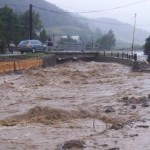
Perceived change in climate over the world begins to be negatively felt in our geographical latitudes, too. Increasing global surface temperature, extreme temperature differences in a short period cause so far unprecedented progress of the weather: dry periods with deficient rainfall are followed by periods of excessive rainfall that is impossible to be absorbed and accumulated by the surface, which causes hydrological cycle disruption in nature. More and more often there occur such rainfalls: in small river basins enormous amount of water fall to the ground and runs down unrestrainedly over surface into watercourses causing so-called flash floods with inconceivable material and moral consequences.

Continue reading

About the Ecology of the Navigation Link the Black Sea – the North Sea

By JCKole on Flickr. Source: Fotopedia. (CC BY-NC-ND 2.0)

In the neighbourhood of the Black Sea – North Sea navigation waterway a very important industrial activity has developed, of high influence on national gross product (NGP) of the respective countries. The risk of nature degradation is included in the polluting factors which result from the main categories of the social activity: material production (organic and inorganic wastes, chemical ashes, scrap iron, damaged grounds, deforestation etc.), energy production (carbon dioxide, carbon oxide, sulphur dioxide, ashes, radio-active wastes etc.), consumption (dust, worn waters, garbage etc.). In order to express the wastes quantity due to the economical activity in a certain national economy or in a certain economic-social area, the input-output model can be used when considering “m” branches of goods production and (n-m) wastes generated by these branches (n m).

Continue reading